Thursday, November 29, 2012

Never too old or out of shape to ride/race

Wow..it's been a while since I've updated my blog.  What's worse, it's been even longer since I've been on my bike.  This past year was anything but ordinary: I built a house in the Pocono Mtns of PA on Lake Wallenpaupack and I worked for three different companies.  Yes, that's right, THREE!  As a result, I had little to no time for riding..let alone training.  When I worked in Philadelphia (at the Navy Shipyard) I was up at 5am and out the door at 5:20am.  I didn't return home until 4:30pm (and trust me), the last thing I wanted to do when I got home was get on a bike and ride.  It was much easier to grab a glass a wine (or a beer) and take a quick cat-nap on the couch before my wife came home from work.  Ride after dinner?  Forget about it..by the time dinner was over it was near 7pm..and I had no energy.  Besides, I was in bed by 9:30pm, ready to do it all over again the next day.

I've been off the bike for about a year now.  To be honest, I've been lucky with my health.  Other than gaining 20 lbs. since I stopped racing..I'm in "excellent" health (at least that's what my latest Physical Exam said- Thank God).  I haven't taken a prescription drug in close to 10 yrs.  I attribute that to riding/racing, eating well..and relatively good genes.  Now that the house at the Lake is finished, and now that I have a stable job (stable is a scary word in this economy) it's time to get back in the saddle.  I know it's going to be tough to get back "in-shape".  After all, I'm no spring chicken.  I'll be 54 yrs. old in less than 6 mos.  When I say "in-shape" I'm talking "racing" shape.  If you race, you know there is a BIG difference between being "in-shape" to ride with your buds in a group ride and being "in-shape" to race.  To get back into "racing shape" I know I'm going to have to lose the 20 lbs. I gained, and I'm going to have to increase my FTP back up to 275w..as a minimum.  Right now, I don't even want to guess what my FTP is.  Rather, I don't even want to know what my FTP is because it will probably de-motivate me.

For me, I need goals to motivate me to accomplish anything in life.  Cycling is no different.  If I don't set a goal, then I'm NOT going to get there.  So, as of tonight, my goal is to compete at the Tour of the Battenkill for the 2014 Season and hang with my group to the finish?  2014?  Yes, I'm skipping 2013 for two reasons: 1) I know it's too soon for me to get back into racing shape and 2) for the 2014 season I'll be riding in the Masters 55+ Category.  Wow, just typing that makes me feel old..ha.  The Tour of the Battenkill is the same race I competed in 2011 and crashed 10 miles into the race.  I completed the race on my own..solo (completely glycogen depleted and dehydrated), because I was never able to catch back on to the 50+ Masters Race Group and draft.  And, I never thought I'd be out on course a 1/2 hour longer than planned.  I trained hard for that race, harder than I ever trained for a race.  Power-to-Weight ratio was up (w/kg=3.7).  For me, that's a good watts per kg- smack in the middle of Cat 3 power.  I was at my all-time low weight too..since high school.

So, I'm off and riding..on the trainer that is.  I started this week.  I'm taking it easy for starters..nothing but Tempo miles on the trainer..with an occasional Threshold effort.  When my heart rate starts nearing LT, I back it down or terminate the ride after 20-30 minutes.  Easy does it.  Hell, my a$$ hurts from riding every night for less than 30 minutes.  I've got to get that hardened again. ha  I'm looking forward to cross-training over the Winter.  I can't wait to get back in the gym and can't wait to go X-Country Skiing up at the Lake House.  Not to mention Mtn Biking.  I love Mtn Biking in the Winter because the speeds are much lower and it's not as cold as riding 20+ mph on the open roads with a road bike (which are usually all salty, cinders/gravel, etc.).  I love Mtn Biking when there is 1-2" of fresh snow on the ground and the sun is out.

If you're in a similar boat as me..been off the bike for a while and need some motivation to get back on..email me at mullerrj@gmail.com  We can share each others pain.  You're never too old to get back in-shape either.  It will just take a little bit more time.  Forever young!

Power ON!  Coach Rob

Monday, September 24, 2012

Why do you race?

I recently read an article in Bicycling mag entitled: "Why so serious?" re: amateur bike racing in the US.  According to the article, amateur cyclists are taking "racing" much too serious.  I agree wholeheartedly.  Racing should be fun..it shouldn't be about the money/prize..since it's non-existent anyway.  For those of you that are lucky enough to reach the podium and cash a check, you'll see for yourself..that it hardly pays the gas bill getting to/from the race.  It always amazes me at how some racers take risks during races that not only jeopardize their health but the health of the peloton.  For who, for what?  It just never makes sense.  I think why some racers are "too serious" is because of their investment and I'm not talking about "monetary" investment, I'm talking about their time and effort preparing for races.  At least that's the reason why I used to take racing too seriously.  I spent a lot of time, sweat/heartache preparing for the racing season, and when I didn't perform- I WAS PISSED.  Everybody wants a return on investment (ROI).  So for me, it wasn't about the money..it was about achieving/reaching goals that I had set up for myself and getting a ROI.

But, in the long run, it comes down to being fun.  If it's not fun anymore then- why race?  There's nothing that says you have to race if  you're a good/strong rider or aspire to be one.   However, having said that, for me racing is/was my reason for training hard.  It gave me a purpose for training hard over the Winter.  If I didn't race, I probably wouldn't train as hard over the Winter and I probably wouldn't be a very strong cyclist.   So, for me, it's kind of a damned if you do, damned if you don't kind of thing.  If I don't take it serious enough, then I won't train as hard.  If I don't train as hard, I won't perform as well.

I don't golf anymore because of two herniated discs in my back.  Back in the day, I played a LOT of golf.  I would venture to guess my wife would say I played too much golf.  If I wasn't playing, I was practicing EVERY day.  Yes, I had a golf club in my hand EVERY day of the week.  My handicap dropped into the single digits.  I was routinely shooting in the mid to high 70s.  I actually played my first par round of golf too..a solid 72 at a relatively difficult course (Upper Perkiomen Valley Golf Course).  I was also VERY competitive.  I was playing in tournaments at least once per week.  It was fun playing and winning.  If I didn't win, I'd at least be in the money.  It didn't matter whether it was an individual or team event.  The problem was, if I didn't shoot in the 70s (which happened occasionally) I was PISSED.  I'll never forget at the Olds Scramble National Championship in Orlando, FL in 1994.  We had an awesome team and I'd say I was the A-player of our team.  On tournament day, I just could NOT hit the ball well.  I didn't choke, I just didn't hit the ball well.  (If you're a golfer, you'll understand that some days you're just off- for whatever reason).  It was NOT fun.  I was miserable.  I was miserable then, and I was miserable when I returned home.  In fact, I was miserable for months afterwards.  I'll never forget my wife telling me, after putting up with my miserable ways..if it's NOT fun..why are you playing?  She was right..so I quit golf for a year.  I just took a year off to relax, settle down, and convince myself..it's only a game and if it wasn't fun playing..then don't play.  I got back into golf, after a year off, but did not practice nearly half of what I did in the past.  I just didn't take the game as serious as I once did.  Although I wasn't shooting in the mid to high 70s anymore (I was playing in the low 80s), it was fun.  In fact, I was having more fun than what I ever did.  No, I wasn't cashing in any tournament winning checks anymore but I didn't care- I was having fun.  (Just like cycling, amateur golf tournament checks are not that much)

I'm not saying that all amateur cycling racers should quit the sport for a year and stop competing.  Only to say, if it's NOT fun anymore..then maybe you should take a year off from racing.  I'll bet when you get back into it, whether you decide to race again or not, it will be more fun.  Life is too short to be miserable.  Life is also too short to be taking cycling too seriously- especially as an amateur.   I tell ALL my athletes I coach before a race, BE SAFE and HAVE FUN!  Cause..that's what it's all about- being safe to ride another day and have fun.  If it's not fun, then maybe you're taking it too seriously.

Power ON!  Coach Rob

(Sorry for not posting in a while, but I've been going through a job change..and think I'm going to be changing jobs once again very soon)

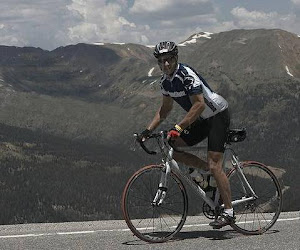
Photo credit: Leo Espinosa

Thursday, July 12, 2012

Fitting workouts into your BUSY schedule

I've gained 25 lbs. in one year.  That's right, 25 lbs.  That's what happens when you STOP training hard and continue eating the same.  At least that's what happened to me.  So, here I am a year later wondering how the hell I'm going to get back into training- like before.  Especially since my BUSY schedule doesn't allow me to workout like it did before.  I have a new job..that's part of the problem.
For me, my day begins at 0500.  I'm out the door and on the road by 0520.  I have an hour drive into the City (Philly)..a drive that is nerve-racking to say the least.  If anyone has ever driven on the Blue Route (I-476) or I-95 in Philly, during rush-hour, you know what I'm talking about.  The road is littered with morons who either don't know how to drive, nor care how to drive, or they have sh$t falling out of their truck while driving 75 mph down an interstate.
Lunch is normally at 1130 and lasts an hour.  I usually walk (fast) a mile to grab something to eat at lunch, bring it back to my car and listen to Sports Radio for 1/2 hour- perhaps catching a 15 min. catnap.  I leave work at 330pm and I'm home by 445pm.  When I get home I'm usually so tired I laydown for an hour before my wife gets home from work.  We normally eat around 6pm.  After dinner, the last thing on my mind is working out...especially if I have a glass of wine or beer with dinner (which I normally do).  I'm usually beat/tired with little motivation to do anything but laydown and read a book after dinner. 

The weekends have been just as busy up at 0600 either enroute to a bike race that I'm officiating at, or out the door bass fishing (at our new house on Lake Wallenpaupack).  Again, by the time I get back to the house it's late and I'm dead tired from being out in the sun all day.  The last thing I'm thinking about is getting on a bike and working out.

If your schedule sounds like mine..there ARE things you can do to fit a workout into your schedule.  I'm going to start doing some of them.  Here's what you can do:

Use your lunch hour.  Lunchtime is a great opportunity to get away from your desk, stretch your legs, and refresh your body and mind.    But yet 90% of the people in my office eat their lunch at their desk during lunch hour (while also claiming they're working which they use as an excuse to leave an hour early each day- but I won't get into that).  If you're in the habit of working through lunch, look for a gym nearby where you can get a quick workout in.  Or, perhaps, you can go on a long walk with a colleague or quick run..provided there is a shower nearby like there is for me in my office building.  I think I'm going to start jogging at lunch.

Commute to work.  I know this isn't possible for everyone, but most of us can manage to get some exercise in during our commute to and from work. If you don't have far to go, can you walk or cycle and leave the car at home? (You'll save on gas and parking too.)  For me, this is NOT possible because I'd be taking my life in my hands with the traffic- not to mention some of the shady neighborhoods I'd have to ride through. 

Exercise first thing in the a.m.  With my last job, this was possible.  With my new job, NO WAY!  I'm not getting up at 0400.  But, if you don't have to be in work until 0900 there is NO EXCUSE why you can't get up at 0600 and get an hour workout in BEFORE work. 
If you get your workout done first thing, you won't end up putting it off or deciding that you've just had "too busy" a day to go to the gym.  Plus, working out in the a.m. gets your body to start burning calories straight away.
g
Exercise right after work.   How often do you head home from work, fully intending to go out to the gym after dinner, only to find yourself still slumped on the sofa at 7PM? It's often hard to get up the motivation to move once you're home and comfy, so try going straight to the gym or the pool after work.  It's even better if you can rope in a friend or two to meet you at the gym.  Because there ARE going to be days when you don't feel like going to the gym after work, where your friends will motivate you to go..and after your workout you'll be glad you did.  You'll also sleep more soundly at night after an evening workout.
g
Exercise with your dog.  If you don't have a dog, get one.  My dog (Rhodesian Ridgeback) Kali (God rest her soul) used to be my favorite workout partner.  We would swim, take long walks, go on jogs and even rollerbladed together on the weekends.  Working out with your dog is a great stress-reliever too.  Hell, just seeing my dog after a long day in the office was a stress-reliever.  Plus, it's healthy for your dog.  God knows today's dogs are as fat and out of shape as their owners/handlers are.  Working out with your dog will benefit both of you.  If you're still not crazy about getting a dog, ask a neighbor (who never gets their dog out of the house) if you can borrow their dog for a quick run or walk.  They'll both love you for it.  You can go on nightly walks/jogs with the dog when the Summer temps have cooled down.
g
The important thing here is to fit exercise/workouts into your schedule in a time slot where you know you won't blow it/them off.  If you try to schedule your workouts AFTER dinner, chances are you're not going to do them.  So, plan workouts into a schedule that you know you'll meet. 

Good Luck.  Power ON! Coach Rob

Tuesday, July 3, 2012

If you can't stand the heat...buy a cooling vest!

Regardless of where you live in the USA I'm sure you've been experiencing the Heat of the Summer recently.  Unless you live in Anchorage, Alaska...it's HOT!  Stinking Hot! 

I'm also sure you've all heard the time-worn expression, "if you can't stand the heat..get out of the kitchen".  For me, that's pretty much my motto when it comes to training in the heat of the Summer.  And, I normally "get out of the kitchen".  If/when I train in the Summer it's normally done in the early morning hours or at night (with a light)...to beat the heat.  If I can't train in the cooler hours of the day, I'll retreat to my cool basement and workout on the trainer for an hour..or so.  But, one thing I will NOT do and that is train during the mid-day heat.  For me, it's more physiological than psychological.  When I'm hot and working out, I sweat like a pig..and no matter how much I hydrate myself..the sun just has a way of baking my brain..and putting me down for the count.  I just can't seem to re-hydrate quickly enough. 

There are articles upon articles written about the physiological effects of heat and its effects on power output.  There is no doubt that heat will quickly zap power.  So, what are you to do as an athlete when you're faced with a choice of a) training outside in 100F temps where you know your max power output will be way down or b) training inside in 70F basement temps where you know your max power output will be reached?  This was a recent question asked of one of the athletes I coach.  I know what I would do, and that is opt for choice b) above.  That's because "mentally" I hate the heat..and physiologically (as forementioned) my body doesn't deal with it very well.  Additionally, if I train indoors in the cooler temps I'll be able to apply higher loads/force to my muscles.  And, isn't that how we get stronger?  Don't we increase the load and let our body adapt to it?  At least that's how I see it.  But, rather than give the athlete my opinion, without any data to support it, I figured I'd ask my mentor, Hunter Allen to see what he thought.  This is what Hunter said, " It’s a tough balance and part of that balance is the mental aspect. If you stick him on the trainer, then it will be mentally challenging more so than the heat in my opinion, unless he’s just one of those nuts that loves the trainer!  Tell him to ride when it’s coolest and do the best he can.  When it’s super hot, give him the option for riding indoors."
gg
I agree with Hunter..ride when it's coolest.  But, what if you can't..and what if you just don't like the trainer?  Well, there is another option and that is to buy and train/ride with a cooling vest.  There are a bunch of cooling vests designed specifically for cyclists: Kul Lite, Sta Coolvest, Hyperkewl, Cooline, Fros-Tcooling, etc.  They range in price from $50 to $300.  I haven't had time to research which is the best bang for the buck..but I'm sure it's only a matter of time when I do.  You can use the vest for warming up for a race and take it off BEFORE you race.  Or, you can leave it on for the race.  You can also use the vest for other sports such as: fishing, motorcycling, running, etc. 
gg
I'll post a future blog on which vest I think is the best bang for the buck- for cyclists.  If anyone out there trains with one (or races with one) let me know which brand you have and how you like it.  I'm interested in knowing.
gg
Until then, stay Cool.  Power ON!  Coach Rob

Friday, June 29, 2012

How to train..like George Hincapie

I read a lot on cycling and normally what I read is regurgitated news/workouts/etc. in some shape or form by some fitness guru that never raced- let alone rode a bike.  I just came across a good article on training, by Bicyling Mag, which is really a Q/A interview with BMC's George Hincapie.  If you don't know about George..you should.  Google his name and read about him.  He's probably the BEST relatively unknown cyclist of all-time.  I say relatively unknown because George served as a "domestique" for the more popular men he helped win World Tour Championships such as: Lance Armstrong, Alberto Contador and most recently Cadel Evans.  Domestiques, like Football linemen, don't get the accolades that the GC Contenders get.

Anyway, here is the Q/A with George.  I've added my comments, in italics, below each Q/A:

Q1. Has your diet changed over the years?
A1.
Yes, when I first started I ate whatever. Now I feel like I can’t get away with any junk food. The older I get, the more perfect I feel I need to get my diet.

There's no doubt in my mind when you are young you can pretty much eat whatever you want and perform at a "top" level.  The older you get, the more quality food/fuel you're going to need to perform at that same level...or even close to it.

Q2. Can you explain why you’d use a race as training?
A2. The real hard finishes, sprints and uphill finishes, are hard to mimic in training. I do tons of motorpacing to match the speed, but in a race, you’re not only going fast and putting out a lot of power, you also have so many factors going on: Where the wind’s coming from, which way you’re turning up the road, where to position yourself. These all require thought process and energy, and you need this mental focus for the end of long races.

I've always maintained that the best training IS racing.  You just can't duplicate it..especially the adrenalin/motivation/nerves/etc.

Q3. What’s your off-season training like?
A3. 
A lot of mountain biking, core training, and tennis. I stop my season in the middle of September and try to take three weeks totally off the bike, but that never happens. I end up doing events or promotional rides with my bike. I start structured road riding in early to mid-November with three- to five-hour rides. There aren’t many intervals in November but in December I start doing more.

I don't know about the tennis..but Mtn. Biking and Core Training is good stuff.

Q4. Do you do core work year round?
A4. Yes, but less during the race season. I incorporate yoga stretches, planks, and back extensions, and I’ll try to do 10 to 15 minutes, once or twice a week, as maintenance. But off-season, or in a training block between races, I’ll do a 30- to 45-minute routine four or five days a week.

Core stuff is ALL good.

Q5. Do you have a favorite strength move?
A5.  No. I actually don’t like doing core, but the planks, step-ups, back extensions are all very important for overall fitness on the bike. In long climbing races, you’re in the mountains three to four hours and everything starts to hurt, your back, your neck. If you can limit that sort of pain you’re able to theoretically put out more pain on the bicycle and be more focused.

All stuff I recommend for my athletes I coach.

Q6.  How about a favorite bike workout then?
A6.   Honestly, my favorite workout is just going out and riding my bike for four hours and not doing intervals—just enjoying the climbs and scenery. But we rarely get to do that.

Can't argue there.

Q7.  How often do you have hard efforts?
A7.   If I’m in a training block, a minimum of four days, usually five, per week. Just three days is an easy week.

Only a pro should be doing that many..where they're resting in-between.  If you work 5 days a week..good luck.

Q8.  How does tennis fit in?
A8.   I just like it, but I wouldn’t recommend tennis for cyclists.

Good answer..but there is a benefit to that..and that is, after tennis he's more motivated to get back on the bike.  It's a mental break.

Take Georges advice on training.  Power ON!  Coach Rob

Tuesday, June 5, 2012

Consistency- the key to cycling training success

If there is one aspect of training that I believe is paramount for success in cycling, it is without a doubt- "consistency".  Even if you're training plan isn't well thought out or optimized, as long as you're consistent with your training..you WILL see results (positive results).  Too many athletes I see, and coach, wonder why they're either plateauing mid-season (around now) or not riding as strong as they should be.  That's because for many of them, there are just too many distractions this time of year.  Lets face it, it's pretty easy to train consistently (indoors) during the dark, cold, dreary months of January, February and March.  What else is there to do?  But when Spring/Summer roll around and the days are bright, sunny and warm there's all kinds of OTHER stuff to do: baseball games, fishing, swimming, boating, hiking, cookouts, outdoor concerts, golf outings, vacations, motorcycling, etc.  The list is endless.  But, all of these things have one thing in common and that they are ALL distractions to your training plan/schedule.  That is, they take you off your game plan.  Before you know it, you missed that weekly training Crit...or you missed that gym workout..or you missed that weekend fast group ride..both of which were making you faster/stronger.

I rode my fastest/strongest when I had a "consistent" training race on Tuesday nights, a really fast group ride on Thursday nights and a Race on the weekends.

So, if you want to stay on schedule and you want to continue to ride faster/stronger- BE CONSISTENT with your training.

Power ON!  Coach Rob

Peaking

What is "peaking"?  Peaking is a strategy for maximizing performance and reaching your goals.  As competitive athletes, we want to "Peak" for our A-events and perform our best.  During a normal racing season (April-October) I plan for two Peaks..one in the Spring (April-June) which I call "Peak 1" and one in the Fall (Sept-Oct) which I call "Peak 2".  I do that for two reasons: 1) I like to schedule an early Spring A-event such as the Tour of the Battenkill and 2) I love riding in the Fall.  I absolutely detest riding/racing in July/August when it's HOT!  Not only because the heat zaps my Power, but because I sweat so much I can't re-hydrate fast enough and I end up "bonking". 

Peak 1 is the time of year when you SHOULD BE "in form" and you SHOULD BE riding your strongest (your FTP is the highest its been all year) but NOT quite "maxed-out".  (Remember: Form=Fitness + Freshness.)   Peak 2 is the time when my FTP is "maxed-out" and when I'm wrapping things up for the year (competitively)..when I'm riding less and I start sitting back and relaxing and watching football on TV on the weekends.  Don't get me wrong, I don't stop riding but I do shorten those 3-4 hr. weekend rides to 1-2 hr. rides and the mid-week (after work) training rides decease (due to lack of daylight).

So, what happens in-between Peak 1 and Peak 2.  Good question.  The period between Peak 1 and Peak 2 is a "rest/taper" period.  A period when you want to re-charge the batteries so-to-speak.  It's not a period where you "do-nothing".  It's one where you  want to reduce your training volume, so that "Freshness" increases but want to keep the intensity up so that "Fitness" is maintained.  Typically, this period should last about 2-3 weeks (enough to recharge the batteries) so that at the end of June you're ready to go for 2-3 more months of competitive racing.

By the way, does the "Peak" photo above look familiar?  It will if you've ever skied Jay Peak, Vermont.

Power ON!  Coach Rob

Wednesday, May 23, 2012

Racing..the best training there is!

For me, the end of May is also the time of year I start winding down my coaching for the season;  at least for the majority of the athletes I coach.  I still coach a few athletes but for the most part I'm done.  Why?  For a few reasons: 1) Because once the roadies start racing regularly in May/June..there really isn't much time to fit any kind of formal training in during the work week..especially if you enter a training crit/race during the week.   Lets look at a normal racers week: if you race both Saturday and Sunday and do a training race mid-week:
Monday- Day OFF/Recovery Ride if you raced on Sunday
Tuesday- Group Ride
Wednesday- Solo Ride
Thursday- Training Race/Criterium
Friday- Pre-Race Ride
Sat/Sunday- Race

So, you can see from the weekly schedule above..there is really only one open day to go hard and that is on Tuesday where I have a "Group Ride" penciled in.  (And, you SHOULD go hard on a group ride.  Also make sure you're one of the weaker riders in the group/ride.  If not, find a faster group/ride).  You might be thinking, wait a minute, I see "Solo Ride" on Wednesday.  Yes, there is a "Solo Ride" penciled in.  But, if you go hard on your Group Ride on Tuesday there is no way you're going to be able to go HARD on Wednesday.  And, there is no reason to go HARD on Wednesday..especially when you have a HARD Training Race/Crit on Thursday.   By doing a fast group ride, a traning race, and weekend race per week..that's all the training you'll have time for..or need.

2) the whole purpose of your Annual Training Plan (that most of you started in December) was to get you in shape for the racing season.  That is, it will improve both Functional Threshold Power and Power at VO2max.  Therefore, once May/June rolls around..the goal/objective has been achieved...at least I hope it has.  I'd say the average athlete I coach increases his/her FTP a minimum of 50w over the Winter.  I had one athlete increase it as much as 75w.  My FTP increases 50w from December to May..granted, I lose most of that increase when the cycling racing season is over.  Once May/June rolls around the emphasis is moved from "general" training to "specific" training.  That is, if you're a sprinter we'll spend a lot of time on L6/L7 Anaerobic Capacity work in June.  If you're an endurance guy..it's time to work on muscular endurance and skills/tactics.

3) June is the time of the year that I'm normally racing myself- or officiating.  However, this year I'm having a home built in the Pocono Mtns of PA so there is NO racing.  To be honest with you, I don't miss it.  I'm having more fun fishing, boating, mountain biking, officiating, etc. this year.

So, if you race, continue racing.  If you want to continue to train (get stronger)..enter a real race or a training race.  After all, racing is the best training.  Power ON! Coach Rob