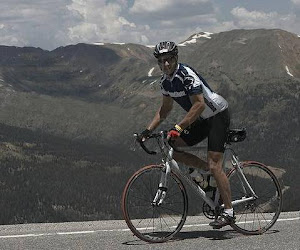
It seems like we've been taking them (tests) forever...doesn't it? Tests in school, tests to operate a motor vehicle, tests at work, tests to become a coach, and even tests for athletes such as "performance tests".
But, why do we test? Testing provides measurement and objectivity to some of the elements of performance. Those elements of performance (for cycling) being: speed, power, strength, endurance, skills, and even pain. Yes...PAIN! Sometimes, the winner of a particular race is determined by who says, "OUCH" last. Testing provides feedback on training. i.e. is your training plan working? Does your training plan need to be tweaked/optimized? Testing provides a baseline. i.e. what is your power at the beginning of the season compared to the end of the season? How does it compare from year to year? How does it compare to other riders in your racing category? Testing identifies strengths and weaknesses. You train your weaknesses and race your strengths. Testing identifies your capabilities..present and future. i.e. if testing identifies you as "sprinter" you're probably NOT going to win any hill climbs now or in the future. Sure, you can become a better "hill climber" but you'll never compete with the best of the hill climbers regardless of your training. Why? Because it's NOT in your physical makeup/genes. Hey, don't blame me..blame your parents. It's the same for you endurance guys that always come up to me and tell me that you want to be a "sprinter". Sorry guys/gals, aint gonna happen. Sure, training will make you better at sprinting, but you will NEVER be a "sprinter". Again, don't blame me (which I've had athletes do in the past)..blame your parents.
There are different forms of testing. Laboratory testing- where the test is performed in a controlled (laboratory) environment with lab quality equipment under the watchful eye of a scientist/physiologist/doctor, Field testing- where the test is performed outside in the environment on the road/track (in the case of cycling) in the presence of a coach/physiologist and Competition testing- where the test is performed under race conditions at the race venue with other athletes. Each of these forms of testing has their advantages/disadvantages. Of the three, I prefer laboratory testing for one reason only (no not because I'm an engineer/scientist) and that is "repeatability". In a laboratory setting you can control all of the environmental factors that normally affect performance outdoors such as the weather, road conditions, etc. It's this "repeatability" that is so important when gauging or measuring performance..especially if you want to determine whether you're getting stronger/faster. The only true disadvantage of laboratory testing, in my opinion, is 'competition' conditions. i.e. the fans/support, your adrenaline rush, the will to push on when your mind/body tells you to give up, other riders, etc. That's why it's important to have someone (a coach, a friend, a tester, etc.) cheer you on when you're performing a laboratory test. You need to re-create that race day excitement/adrenaline rush.
Ok, now that I've identified a need to test lets discuss where you should test, what to test and when to test. I already told you where you should test..and that's in a laboratory. Additionally, you want to ensure that the lab (or test facility) has "laboratory quality" equipment. Laboratory quality equipment will ensure that "repeatability" is maintained from test-to-test. I only use Computrainer Lab quality ergometers/trainers when performing tests. In the past, I've performed tests in my "finished" basement. It's not the best place..but then again, it's better than some commercial facilities I've seen. It has good lighting, a commercial-grade fan (which is VERY important), awesome stereo, awesome computer and software for data collection, excellent video projection system, clean/dry, etc. What to test? There are three tests that pretty much give me all the rider/athlete information I need as a coach: 1) a Functional Threshold Power (FTP) test, 2) a 5 minute test and 3) a 1 minute test. The FTP test will give me a good idea of the athltetes Lactate Threshold power. The 5 minute test will give me a good idea of the athletes VO2max and the 1 minute test will give me a good idea of the athletes Anaerobic Capacity. These are three good physiological benchmarks for gauging/predicting performance for anything from a 1 minute sprint to an hour Time Trial. I like to test FTP one day and the 1 and 5 minute test another day...usually the end of the same week. When to test? For cyclists, including myself, I like to test 4x/year...every quarter (3 mos.). I like to test the beginning of November (at the start of the annual training plan), the beginning of February (mid training season), the beginning of May (road race season) and mid-August (end of road race season).
Lastly, and most importantly, you need to have someone who knows what they're doing "analyze" the test data and make sense of it for you. It sounds easy enough to go out and purcahse a trainer and do your own testing in your garage/basement and draw your own conclusions..but trust me, it's not that easy. It's because there are so many variables. Like what? Like the time of year, the day you test, the time you test, the test conditions (heat/humidity), your stress levels, your weight, your nutrition, your bike setup, your test equipment, your hydration level, your conditioning, your attitude, your motivation level, your fitness level, your fatigue level, your warm-up, etc. Any one of these variables can affect your test results. Even if I'm not performing your test, make sure the person that does is a USA Cycling Power Based Coach. They are the only ones that are smart enough, in my opinion, to make some sense of your (power) test data and give you advice for putting together a solid annual training plan that will improve your weaknesses and make you a faster/stronger rider. BTW, good luck with that, the last time I checked I was the only USA Cycling Power Based Cycling Coach in Pennsylvania. There is one in New Jersey though..she attended the same Power Based Coaching clinic in Atlanta, GA that I did...years ago. She draws blood though..and charges more.
If you're interested in being tested, and you live near me (Doylestown, PA), stay tuned to this blog because I'm looking at finding a "better" space/place (than my finished basement) to perform Performance Testing. I've already got a good lead. When I say "better" I'm talking more accessible to the rider/athlete with a locker room. Pricing will remain the same as previous years, $75 for non-coached athletes and $50 for coached athletes. I've been talking to a couple local fitness center owners and I'm sure one of them will allow me use of their facility a couple weekends out of the year in: November, February, May and August.
One last thing, although I call inside testing "laboratory testing" I don't draw blood and use a blood lactate analyzer for determining Lacate Threshold nor do I use any fancy/expensive oxygen breathing machines for VO2max testing. It's not that I don't have the $$ to purchase these devices..I just don't believe they are necessary for acquiring accurate test data and for repeatability. Besides, I like to keep it simple and keep the test costs passed on to the athlete to a minimum.
Power ON! Coach Rob
Monday, August 29, 2011
Saturday, August 20, 2011
No Pain...No Gain...the Myth
I'm sure you've heard it. Or, perhaps you may have seen/read an article or two written about it over the years. This exercise motto/proverb asserts that if you don't feel any pain while working out/exercising then you are probably wasting your time. That is, you won't see any fitness/performance gains. Is this a myth? It probably isn't too far from the truth. Actually, I'd rather see my athletes train at or near their pain threshold than the other extreme/direction. Why is that? Because there are more physiological adaptations taking place in your body (that lead to performance increases) when you train at or near your "pain threshold".
I call the Lactate Threshold Level (L4) my "Pain" Threshold. Why? Because anything above that Level is "painful"- at least for me it is. So, if the next level (which by the way is VO2 max Level L5) is "painful", what is L4? I call the L4 Threshold Level "uncomfortable".
I know that many of you are transitioning from Road to Cyclo-Cross racing. I also know that many of you are hanging up the racing shoes for the year. For those of you that are hanging up the road racing shoes, my advice is to get at least one Lactate Threshold (L4) ride in a week throughout the Fall..whether you get it on your road bike, mtn. bike or basement trainer. Just 60 minutes at or near Threshold will help prevent any major fitness loss. (If I can't get a 60 minute Threshold session in, I'll do two 30-minute sessions two days apart during the week). Theoretically (and Physically) you should be able to ride at Threshold for an hour. In fact, that's how we define Functional Threshold Power (FTP)..it's your maximum sustained average power over a one hour period. Or, put simply, your "hour power". You can combine the Threshold ride with your 3 hr. weekend ride..or, you can do it on a spin bike in the gym or in your home during the week.
If you do that, one threshold ride per week, it will hold you over through September/October and have you in relatively good shape to start your Annual Training Plan in November/December. That's assuming you don't hibernate to the couch watching football all weekend, drinking beer, eating and getting fat. When the Winter Training Session starts, I normally drop the one hour Threshold rides (initially) only because I'm traininig/riding at least 3-4 days per week at L3/L4 Sweetspot instead of riding just 1-2 days at L4. My Winter L3/L4 Sweetspot Level almost becomes my L4 Threshold Level of the Fall. That's because my Power increases relatively quickly when I first start my Annual Training Plan..as does most athletes.
The important thing to remember is to get at least one hi-intensity ride in per week this Fall. Also, if you train with a Power Meter, I recommend you do an FTP test on yourself. Or, better yet, email me and I'll tell you about the Performance Testing I'll be running at Fusion Fitness, with my friend Fernando Peredes, this Fall. (That's the game plan anyway..need to hammer out details with Fernando) You MUST know what your current FTP is to be in the proper training zone. You'll be surprised how quickly your FTP drops when the racing season is over. You Cyclo-Cross guys are just putting off the inevitable..i.e, a decreasing FTP. That's not a bad thing..your body's (of all cyclists) need some serious R&R after a full Road and Cyclo Cross season. If you don't train with a Power Meter, just make sure the one hi-intensity ride per week is "uncomfortable". You don't have to train in pain..but then again, you're not too far away either...or shouldn't be.
Power ON! Coach Rob
I call the Lactate Threshold Level (L4) my "Pain" Threshold. Why? Because anything above that Level is "painful"- at least for me it is. So, if the next level (which by the way is VO2 max Level L5) is "painful", what is L4? I call the L4 Threshold Level "uncomfortable".
I know that many of you are transitioning from Road to Cyclo-Cross racing. I also know that many of you are hanging up the racing shoes for the year. For those of you that are hanging up the road racing shoes, my advice is to get at least one Lactate Threshold (L4) ride in a week throughout the Fall..whether you get it on your road bike, mtn. bike or basement trainer. Just 60 minutes at or near Threshold will help prevent any major fitness loss. (If I can't get a 60 minute Threshold session in, I'll do two 30-minute sessions two days apart during the week). Theoretically (and Physically) you should be able to ride at Threshold for an hour. In fact, that's how we define Functional Threshold Power (FTP)..it's your maximum sustained average power over a one hour period. Or, put simply, your "hour power". You can combine the Threshold ride with your 3 hr. weekend ride..or, you can do it on a spin bike in the gym or in your home during the week.
If you do that, one threshold ride per week, it will hold you over through September/October and have you in relatively good shape to start your Annual Training Plan in November/December. That's assuming you don't hibernate to the couch watching football all weekend, drinking beer, eating and getting fat. When the Winter Training Session starts, I normally drop the one hour Threshold rides (initially) only because I'm traininig/riding at least 3-4 days per week at L3/L4 Sweetspot instead of riding just 1-2 days at L4. My Winter L3/L4 Sweetspot Level almost becomes my L4 Threshold Level of the Fall. That's because my Power increases relatively quickly when I first start my Annual Training Plan..as does most athletes.
The important thing to remember is to get at least one hi-intensity ride in per week this Fall. Also, if you train with a Power Meter, I recommend you do an FTP test on yourself. Or, better yet, email me and I'll tell you about the Performance Testing I'll be running at Fusion Fitness, with my friend Fernando Peredes, this Fall. (That's the game plan anyway..need to hammer out details with Fernando) You MUST know what your current FTP is to be in the proper training zone. You'll be surprised how quickly your FTP drops when the racing season is over. You Cyclo-Cross guys are just putting off the inevitable..i.e, a decreasing FTP. That's not a bad thing..your body's (of all cyclists) need some serious R&R after a full Road and Cyclo Cross season. If you don't train with a Power Meter, just make sure the one hi-intensity ride per week is "uncomfortable". You don't have to train in pain..but then again, you're not too far away either...or shouldn't be.
Power ON! Coach Rob
Monday, August 15, 2011
Fun/Charity Rides
I enjoy fun/charity rides almost as much as I do racing...possibly even more. What's not to enjoy? Here are the advantages:
a. No pressure to perform.
b. You can ride at your own pace.
c. You meet new/exciting people and make new friends.
d. You get to stop and have something to eat at the Food Stops...REAL food...along the route.
e. You get to eat REAL food after the ride.
f. You don't have to worry about being dropped.
g. You don't have to worry about crashing...normally...(ha, see more below)
h. You can go as hard/fast as you want...or as easy.
i. You can make it your own race..provided you stop at all the stop signs and traffic lights.
j. Your money goes to charity instead of some race promotors/directors pocket.
k. You're helping a good cause.
l. You can always sign-up on race day..if you think the weather will be too severe for you.
m. The riders are nicer/more friendly than racers...probably because they're not trying to prove anything...and probably because they're just happy to be able to ride.
n. You've got sag wagon support along the route if you need it.
o. You get to ride for 5+ hrs. if you do a century ride.
p. You get a chance to win prizes after the race.
q. You at least get to drive home after the race with a T-shirt or something for the effort and entry fee.
r. Some rides you get a chance to ride with a REAL Pro. In the Univest GP Cyclosportif ride, two years ago, you could have ridden with Bobby Julich.
s. Etc.
Anyway, you get the point. Yesterday, I attended the 2011 Gran Fondo Colnago Philadelphia Bike Ride. No, I didn't get a chance to ride in a torrential downpour for 5+ hours (been there done that) I got to stand outside in it and take photographs. Actually, I got to drive my car along the route and take pics so I didn't have to stand outside. And, at the end of the event I got to take pictures under a huge tent/canopy..so life was good. I was going to take my Moto to shoot photographs but the roads were already flooded when I headed out at 5 a.m. from my house in Doylestown. Boy am I glad I didn't take it..I would have dumped it on the flooded streets I drove on getting to/from Philly.
Despite the torrential downpours all of the 1000+ riders (yes that many even in the rain) that started made it to the finish line with a smile...albeit some were banged-up and bleeding from falling on the rain-slick roads. In fact, on one particular steep descent I was following one guy that I thought was going a little too fast downhill. Just as that thought crossed my mind, the guy locked up his rear wheel and skidded off the roads into the woods- head over heels. I stopped to see if he was ok..and luckily he was. He lucked out that he fell into the grassy bank just nearly missing a BIG tree.
I met a lot of interesting/fun people after the race while they were eating- and actually made a couple business contacts for future photog events. One guy was telling me he wanted to buy a power meter and start to race. (Music to my ears). We chatted for a bit and I discovered that this now svelte 150 lb. biker used to weigh 240 lbs. Can you believe that? He dropped 90 lbs. and now he wants to race bikes? I think that's AWESOME! Cycling obviously saved this 30 yr. old's life.
If you race and haven't done a charity ride lately...do one with some friends..or just go solo and meet new friends. You'll be surprised at how much fun you'll have...even on a nasty rainy day like yesterday.
Power ON! Coach Rob
a. No pressure to perform.
b. You can ride at your own pace.
c. You meet new/exciting people and make new friends.
d. You get to stop and have something to eat at the Food Stops...REAL food...along the route.
e. You get to eat REAL food after the ride.
f. You don't have to worry about being dropped.
g. You don't have to worry about crashing...normally...(ha, see more below)
h. You can go as hard/fast as you want...or as easy.
i. You can make it your own race..provided you stop at all the stop signs and traffic lights.
j. Your money goes to charity instead of some race promotors/directors pocket.
k. You're helping a good cause.
l. You can always sign-up on race day..if you think the weather will be too severe for you.
m. The riders are nicer/more friendly than racers...probably because they're not trying to prove anything...and probably because they're just happy to be able to ride.
n. You've got sag wagon support along the route if you need it.
o. You get to ride for 5+ hrs. if you do a century ride.
p. You get a chance to win prizes after the race.
q. You at least get to drive home after the race with a T-shirt or something for the effort and entry fee.
r. Some rides you get a chance to ride with a REAL Pro. In the Univest GP Cyclosportif ride, two years ago, you could have ridden with Bobby Julich.
s. Etc.
Anyway, you get the point. Yesterday, I attended the 2011 Gran Fondo Colnago Philadelphia Bike Ride. No, I didn't get a chance to ride in a torrential downpour for 5+ hours (been there done that) I got to stand outside in it and take photographs. Actually, I got to drive my car along the route and take pics so I didn't have to stand outside. And, at the end of the event I got to take pictures under a huge tent/canopy..so life was good. I was going to take my Moto to shoot photographs but the roads were already flooded when I headed out at 5 a.m. from my house in Doylestown. Boy am I glad I didn't take it..I would have dumped it on the flooded streets I drove on getting to/from Philly.
Despite the torrential downpours all of the 1000+ riders (yes that many even in the rain) that started made it to the finish line with a smile...albeit some were banged-up and bleeding from falling on the rain-slick roads. In fact, on one particular steep descent I was following one guy that I thought was going a little too fast downhill. Just as that thought crossed my mind, the guy locked up his rear wheel and skidded off the roads into the woods- head over heels. I stopped to see if he was ok..and luckily he was. He lucked out that he fell into the grassy bank just nearly missing a BIG tree.
I met a lot of interesting/fun people after the race while they were eating- and actually made a couple business contacts for future photog events. One guy was telling me he wanted to buy a power meter and start to race. (Music to my ears). We chatted for a bit and I discovered that this now svelte 150 lb. biker used to weigh 240 lbs. Can you believe that? He dropped 90 lbs. and now he wants to race bikes? I think that's AWESOME! Cycling obviously saved this 30 yr. old's life.
If you race and haven't done a charity ride lately...do one with some friends..or just go solo and meet new friends. You'll be surprised at how much fun you'll have...even on a nasty rainy day like yesterday.
Power ON! Coach Rob
Monday, August 1, 2011
Gran Fondo Colnago (GFC) Philadelphia
Get ready, in two weeks, on Sunday August 14, 2011 as the GFC Philly returns to the City of Brotherly Love. Last years' first annual ride in Philadelphia was a HUGE success.
I'll be there taking action photos from my moto and most likely following the leaders of the 108 mile ride. There are three rides: 108, 73 or a 33 mile ride/route. I believe the 108 mile route has close to 7000 ft. of climbing...which is a lot of vertical for 108 miles. In fact, if you're NOT in cycling shape..I'd avoid the 108 miler for the 73 miler. Hey, 73 miles is still a long day in the saddle..especially with the hills and the heat. You're looking at 4 hrs. for the 73 miler and 6 hrs. for the 108 miler if you're a relatively strong rider. If you're not a strong rider, it's going to be a looooooooong day in the saddle.
There's a King and Queen of the Mountain climb (and awards) on the 108 mile ride/group.
I just want to mention one thing about this ride..it is NOT a race. I repeat it is NOT a race. If you race this course, and blow stop signs, lights, etc. (like some did last year) you're going to get hurt (or get a ticket) because it's NOT a closed course. And, although you may have a moto out front (like me) you still MUST stop at all stop signs, lights, etc...just like a car. The riders that usually try to race the course are usually wanna-be pros that don't normally race a sanctioned USA Cycling event. To them, this is their day. That's all well and good..but remember, you must obey the traffic signs/signals...or you're going to pay one way or another.
Also, the KOM and QOM awards don't go to the first person that reaches the top of the hill/mountain from the starting line. There is a timer at the bottom of the climb thats starts your climb time and one at the top that stops your climb/time. So, if you want to win the KOM or QOM award, it would be prudent to take your time from the start, sit-in and draft, up until the climb..then GO FOR IT! Just be sure to check and make sure this is correct before you start. I don't want you coming after me telling me I blew the KOM or QOM award for you because I fed you bad dope.
The event is first-class. The 108 mile route is beautiful, challenging, scenic, etc. starting from the steps of the Art Museum in Philly (next to the Rocky statue...GO ROCKY!) and finishes in Fairmount Park. The food/spread at the finish line is second to none. It's worth the entry fee alone..if you can stuff that much in your mouth..ha.
Lastly, make sure you hydrate properly and fuel yourself properly BEFORE and DURING the event. There were quite a few riders that dehydrated and bonked on the 108 mile course last year. It was hot..and I can't imagine it being cooler in two weeks than it is now. So, BE PREPARED! Also, put some sunscreen on. 4-6 hrs. plus is a long time to bake in the sun. You might want to also put some chamois creme on too..otherwise you're legs/butt will be sore. It's going to be sore anyway, but you don't want it bleeding. And yes, there were some bad cases of bleeding saddle soreness from last years race. One poor gal could hardly walk from the Ambulance after the ride.
Here's the link for more information on GFC Philly..read it all: http://granfondousa.com/philadelphia/ The ride starts at 0700 and it's a mass start. The mass start photo coming up the Benjamin Franklin Parkway is actually my photo that I took last year for GFC Philly. It's a great shot (if I say so myself) with the flowers in the foreground, riders in the middle, and William Penn looking down from City Hall in the background.
See you in two weeks. Power ON! Coach Rob
I'll be there taking action photos from my moto and most likely following the leaders of the 108 mile ride. There are three rides: 108, 73 or a 33 mile ride/route. I believe the 108 mile route has close to 7000 ft. of climbing...which is a lot of vertical for 108 miles. In fact, if you're NOT in cycling shape..I'd avoid the 108 miler for the 73 miler. Hey, 73 miles is still a long day in the saddle..especially with the hills and the heat. You're looking at 4 hrs. for the 73 miler and 6 hrs. for the 108 miler if you're a relatively strong rider. If you're not a strong rider, it's going to be a looooooooong day in the saddle.
There's a King and Queen of the Mountain climb (and awards) on the 108 mile ride/group.
I just want to mention one thing about this ride..it is NOT a race. I repeat it is NOT a race. If you race this course, and blow stop signs, lights, etc. (like some did last year) you're going to get hurt (or get a ticket) because it's NOT a closed course. And, although you may have a moto out front (like me) you still MUST stop at all stop signs, lights, etc...just like a car. The riders that usually try to race the course are usually wanna-be pros that don't normally race a sanctioned USA Cycling event. To them, this is their day. That's all well and good..but remember, you must obey the traffic signs/signals...or you're going to pay one way or another.
Also, the KOM and QOM awards don't go to the first person that reaches the top of the hill/mountain from the starting line. There is a timer at the bottom of the climb thats starts your climb time and one at the top that stops your climb/time. So, if you want to win the KOM or QOM award, it would be prudent to take your time from the start, sit-in and draft, up until the climb..then GO FOR IT! Just be sure to check and make sure this is correct before you start. I don't want you coming after me telling me I blew the KOM or QOM award for you because I fed you bad dope.
The event is first-class. The 108 mile route is beautiful, challenging, scenic, etc. starting from the steps of the Art Museum in Philly (next to the Rocky statue...GO ROCKY!) and finishes in Fairmount Park. The food/spread at the finish line is second to none. It's worth the entry fee alone..if you can stuff that much in your mouth..ha.
Lastly, make sure you hydrate properly and fuel yourself properly BEFORE and DURING the event. There were quite a few riders that dehydrated and bonked on the 108 mile course last year. It was hot..and I can't imagine it being cooler in two weeks than it is now. So, BE PREPARED! Also, put some sunscreen on. 4-6 hrs. plus is a long time to bake in the sun. You might want to also put some chamois creme on too..otherwise you're legs/butt will be sore. It's going to be sore anyway, but you don't want it bleeding. And yes, there were some bad cases of bleeding saddle soreness from last years race. One poor gal could hardly walk from the Ambulance after the ride.
Here's the link for more information on GFC Philly..read it all: http://granfondousa.com/philadelphia/ The ride starts at 0700 and it's a mass start. The mass start photo coming up the Benjamin Franklin Parkway is actually my photo that I took last year for GFC Philly. It's a great shot (if I say so myself) with the flowers in the foreground, riders in the middle, and William Penn looking down from City Hall in the background.
See you in two weeks. Power ON! Coach Rob
Saturday, July 30, 2011
Know the rules
It seems like life is nothing but a learning experience. We make good decisions and bad decisions and hopefully learn from BOTH. Today I learned a lot from making a "bad" decision as a Starter in a Time Trial because I wasn't clear on the rules. A rider also made a "bad" decision for being late, having a mechanical, and thinking that they'd get a NEW start time. It didn't affect the outcome of the race but I made a rider very upset..which also upset me. In this case, (I don't want to go into specifics) we BOTH didn't clearly understand the rules. Yes, as a relative newbie official I'm still learning. Trust me, it's not easy making quick decisions as an official during an event. Here's the USA Cycling rule for Time Trials regarding the start:
3E5. Start.
(a) Each rider shall report to the starter at least three minutes before his or her scheduled starting time and shall start at the scheduled time. If a rider appears later than the appointed starting time, the start will be allowed only if it does not interfere with the riders starting on schedule. If it does interfere, the rider may be further delayed. In case of a late start, the appointed time shall be used in computing the results.
I've underlined the most important part of the rule. That is, if you miss your start time the clock is still running on your Time Trial. For example, if you were scheduled to start at 8:00:30 and you don't start until a minute later (9:00:30) your final time is based on your published start time NOT your actual start time. In most Time Trials..there is usually some time to insert you in-between other racers (if you miss your start time) as long as it doesn't interfere with other riders. The key there is as long as it doesn't interfere with other riders. During the same TT today, I tried to insert a racer earlier that missed their start time in-between two other racers that were scheduled 30 seconds apart. When that person got to the line I asked them if they were ready and they said, "Yes". When they came to the line they had problems clipping in and almost delayed the start of the other racer that was scheduled to go off. (So much for being ready). What I should have done is pulled that rider to the side and had them wait longer..until they were TRULY ready. Why should a late rider disrupt the flow of riders that were waiting and on time? Everything went off ok..but I upset a rider in my decision making process.
So, here's the moral of the story- KNOW THE RULES. It doesn't matter whether it's a Crit, Road Race, TT, etc. In the case of a TT, if you're late and miss your start..because of traffic congestion, a broken down car, a bike mechanical, or whatever..you're going to be inserted IF it's possible. If not, you wait until the last rider leaves which obviously means..you're NOT going to be competitive. i.e. you're pretty much done for the day. So, let that be a lesson to everyone. If you're racing a TT, be there at the starting line AT LEAST 3 minutes early to get in the que. The only exception to an excused late start is if they closed a road to the event in the case of an emergency/accident or something that you had no control over. If that does happen, realize it's still up to the Chief Ref as to whether it's excusable. If that does ever happen, the first thing I would do is seek the Chief Ref out, plead your case, and hope that they grant you a new start time.
Here's a link to the USA Cycling Rulebook. PLEASE read the rules and know the rules. If you don't understand them, or need further clarification..ASK. http://www.usacycling.org/news/user/story.php?id=4220
Oh, one other thing. When you are at the starting line of a TT being held by the holder, ready for your 5 second countdown,..please don't back pedal excessively. I see riders do this all the time. If you drop a chain during your 5 second countdown..you are SOL. The clock will start on your ride while you're putting your chain back on. Also, make sure that you are in a gear that you can pedal away on your own power. A few riders today had their bikes in too big a gear and almost couldn't turn the cranks out of the chute. And, they almost fell over. I had to hold a couple people up from falling over into me. The holder WILL NOT push you. They are not allowed to. If you fall out of the gate you do NOT get a FREE re-start...the clock is running. Sometimes even the top Pros forget. If you saw the final individual TT of this years Tour de France (on Saturday) you may have noticed that Alberto Contador almost fell out of the chute. I'm not sure what happened. I'm guessing he thought the holder was going to push him down the ramp or that he was in too big a gear..because he almost fell over. If he didn't unclip and put a foot down..he probably would have fallen. Or, who knows, maybe the holder held him back..ha (just kidding).
Power ON! Coach Rob
3E5. Start.
(a) Each rider shall report to the starter at least three minutes before his or her scheduled starting time and shall start at the scheduled time. If a rider appears later than the appointed starting time, the start will be allowed only if it does not interfere with the riders starting on schedule. If it does interfere, the rider may be further delayed. In case of a late start, the appointed time shall be used in computing the results.
I've underlined the most important part of the rule. That is, if you miss your start time the clock is still running on your Time Trial. For example, if you were scheduled to start at 8:00:30 and you don't start until a minute later (9:00:30) your final time is based on your published start time NOT your actual start time. In most Time Trials..there is usually some time to insert you in-between other racers (if you miss your start time) as long as it doesn't interfere with other riders. The key there is as long as it doesn't interfere with other riders. During the same TT today, I tried to insert a racer earlier that missed their start time in-between two other racers that were scheduled 30 seconds apart. When that person got to the line I asked them if they were ready and they said, "Yes". When they came to the line they had problems clipping in and almost delayed the start of the other racer that was scheduled to go off. (So much for being ready). What I should have done is pulled that rider to the side and had them wait longer..until they were TRULY ready. Why should a late rider disrupt the flow of riders that were waiting and on time? Everything went off ok..but I upset a rider in my decision making process.
So, here's the moral of the story- KNOW THE RULES. It doesn't matter whether it's a Crit, Road Race, TT, etc. In the case of a TT, if you're late and miss your start..because of traffic congestion, a broken down car, a bike mechanical, or whatever..you're going to be inserted IF it's possible. If not, you wait until the last rider leaves which obviously means..you're NOT going to be competitive. i.e. you're pretty much done for the day. So, let that be a lesson to everyone. If you're racing a TT, be there at the starting line AT LEAST 3 minutes early to get in the que. The only exception to an excused late start is if they closed a road to the event in the case of an emergency/accident or something that you had no control over. If that does happen, realize it's still up to the Chief Ref as to whether it's excusable. If that does ever happen, the first thing I would do is seek the Chief Ref out, plead your case, and hope that they grant you a new start time.
Here's a link to the USA Cycling Rulebook. PLEASE read the rules and know the rules. If you don't understand them, or need further clarification..ASK. http://www.usacycling.org/news/user/story.php?id=4220
Oh, one other thing. When you are at the starting line of a TT being held by the holder, ready for your 5 second countdown,..please don't back pedal excessively. I see riders do this all the time. If you drop a chain during your 5 second countdown..you are SOL. The clock will start on your ride while you're putting your chain back on. Also, make sure that you are in a gear that you can pedal away on your own power. A few riders today had their bikes in too big a gear and almost couldn't turn the cranks out of the chute. And, they almost fell over. I had to hold a couple people up from falling over into me. The holder WILL NOT push you. They are not allowed to. If you fall out of the gate you do NOT get a FREE re-start...the clock is running. Sometimes even the top Pros forget. If you saw the final individual TT of this years Tour de France (on Saturday) you may have noticed that Alberto Contador almost fell out of the chute. I'm not sure what happened. I'm guessing he thought the holder was going to push him down the ramp or that he was in too big a gear..because he almost fell over. If he didn't unclip and put a foot down..he probably would have fallen. Or, who knows, maybe the holder held him back..ha (just kidding).
Power ON! Coach Rob
Thursday, July 28, 2011
Are You a Winner?
According to Webster a "Winner" is:
a) one that is successful especially through praiseworthy ability and hard work
b) a victor especially in games and sports
c) one that wins admiration
d) a shot in a court game that is not returned and that scores for the player making it
Contrary to the most popular definitions b) and d), the definitions I like best are a) and c).
Today, at work, I was witnessing some of our country's finest hi-performance jet pilots (both civilian and military) involved in Dynamic Flight Simulator (aka Centrifuge) testing. Each pilot was performing a set of Air Combat Maneuver (ACM) profiles that consisted of pulling G's from 1 to 9 G's for durations up to and including 30 seconds. (FYI, pulling G's for 30 seconds is HARD work) For those of you that aren't familiar with pulling G's in a jet or a Centrifuge, watch these two videos and you'll get an idea. http://www.youtube.com/watch?v=TJi1vi9XHWY and http://www.youtube.com/watch?v=GhGucWnyORU&feature=related Funny, in the first You Tube video, the F/A-18 backseater in this video G-LOC'd (G-induced Loss of Consciousness) not once but TWICE. If you've witnessed the hundreds of Centrifuge runs/tests like I have over a 30 yr period you'll notice that the shorter, stockier, red-meat eating (hi blood pressure guys) are some of the better G-pullers (or G-Monsters as they're called). And, that the taller, slimmer, vegetable eating (low blood pressure guys) are some of the not-so-good G-pullers. i.e. their G-tolerance is not that high and they are prone to G-LOC incidents like that shown in the video. I've also discovered that women are also good Centrifuge riders. Anyway, there is a certain degree of bravado/machoism involved in not only being able to pull high-G's but to also endure an ACM profile such as the ones I witnessed today. (BTW, G-profiles such as the ones I witnessed being run today are VERY strenuous. They are WORK! You pull high-G's at max heart rate..and use a full body straining maneuver to help retain consciousness. For me, it hurts watching.)
So, what's all this have to do with being a "Winner" and how does this apply to cycling..if anything? Well, in the jet jocks world..you're a "Winner" if you can endure the high G's that the machine produces..whether it's an F/A-18 jet or a Centrifuge. Today, a tall athletic pilot G-LOC'd at 7 Gs and ended his profile run prematurely. He could have easily stopped the run when he knew he was ready to lose consciousness..but he didn't. He pushed it to the limit..until he unvoluntarily nodded off. He wanted to finish the profile so all of his data could be used in the test study. (If you don't complete the profile/run the data isn't used) In his eyes..he failed today..he was a LOSER. Just after being pulled from the test, because he G-LOC'd, his friend (a female) entered the Centrifuge to begin her profile run. She did MUCH BETTER than he did which only added insult on top of his injury. She was a WINNER! I could see that he was embarrassed and humiliated..he let a girl beat him. But after her Centrifuge run, he was the first to greet her and give her a high five (and a hug) and take her picture. He could have easily left the building with his tail between his legs (after his run) and headed back to the hotel. Instead, he stayed and celebrated the moment with his friend. To me, he was the WINNER today...based on definitions a) and c) above.
Just this past weekend, I heard a few of the athletes that I had trained with for their Ironman Lake Placid event, did NOT finish their race..for whatever reason (usually bonking, cramping up, injuryng themself, crashing, mechanicals, etc). I'm sure in their eyes..they lost..they did NOT win (let alone finish) and were definitely NOT winners. To me, they were WINNERS. Why? Because I know they trained long and hard for this event. Again, see definitions a) and c) above.
Look at Thomas Voeckler at this years Tour de France. He didn't even take a podium spot, but to me..he was the WINNER. Why? Once again, see definitions a) and c) above.
I have some athletes I coach that have come in dead last in races this year. A race where they could have definitely/easily quit on, rode off the course and saved face. To me, they're Winners for hanging in there and giving it their all.
For any of you out there that train long hard hours and don't achieve your goals (for whatever reason)...you're Winners in my book because of definitions a) and c). For me, unlike sponsors, it's not about Wins and Losses..it's all about hard work and giving it your all- regardless of the outcome. It's ashame the big $$ sponsors don't see it my way. They're programmed to reward WINNERS only based on their definition..which is definition b) above. There are NO LOSER athletes that train hard and compete and never quit/surrender. The losers are the couch-potatos of the world that waste their God-given ability/talents..and abuse their bodies. The losers are the "quitters" of the world. The ones that quit when it starts to get hard. Quitters NEVER Win.
Are you a Winner? Damn right you are..if you train/compete/race..and give it your all...regardless of the outcome. I just wish others saw it the same way. If it were up to me, a Winner would be defined by c) (above) only.
Power ON! Coach Rob
a) one that is successful especially through praiseworthy ability and hard work
b) a victor especially in games and sports
c) one that wins admiration
d) a shot in a court game that is not returned and that scores for the player making it
Contrary to the most popular definitions b) and d), the definitions I like best are a) and c).
Today, at work, I was witnessing some of our country's finest hi-performance jet pilots (both civilian and military) involved in Dynamic Flight Simulator (aka Centrifuge) testing. Each pilot was performing a set of Air Combat Maneuver (ACM) profiles that consisted of pulling G's from 1 to 9 G's for durations up to and including 30 seconds. (FYI, pulling G's for 30 seconds is HARD work) For those of you that aren't familiar with pulling G's in a jet or a Centrifuge, watch these two videos and you'll get an idea. http://www.youtube.com/watch?v=TJi1vi9XHWY and http://www.youtube.com/watch?v=GhGucWnyORU&feature=related Funny, in the first You Tube video, the F/A-18 backseater in this video G-LOC'd (G-induced Loss of Consciousness) not once but TWICE. If you've witnessed the hundreds of Centrifuge runs/tests like I have over a 30 yr period you'll notice that the shorter, stockier, red-meat eating (hi blood pressure guys) are some of the better G-pullers (or G-Monsters as they're called). And, that the taller, slimmer, vegetable eating (low blood pressure guys) are some of the not-so-good G-pullers. i.e. their G-tolerance is not that high and they are prone to G-LOC incidents like that shown in the video. I've also discovered that women are also good Centrifuge riders. Anyway, there is a certain degree of bravado/machoism involved in not only being able to pull high-G's but to also endure an ACM profile such as the ones I witnessed today. (BTW, G-profiles such as the ones I witnessed being run today are VERY strenuous. They are WORK! You pull high-G's at max heart rate..and use a full body straining maneuver to help retain consciousness. For me, it hurts watching.)
So, what's all this have to do with being a "Winner" and how does this apply to cycling..if anything? Well, in the jet jocks world..you're a "Winner" if you can endure the high G's that the machine produces..whether it's an F/A-18 jet or a Centrifuge. Today, a tall athletic pilot G-LOC'd at 7 Gs and ended his profile run prematurely. He could have easily stopped the run when he knew he was ready to lose consciousness..but he didn't. He pushed it to the limit..until he unvoluntarily nodded off. He wanted to finish the profile so all of his data could be used in the test study. (If you don't complete the profile/run the data isn't used) In his eyes..he failed today..he was a LOSER. Just after being pulled from the test, because he G-LOC'd, his friend (a female) entered the Centrifuge to begin her profile run. She did MUCH BETTER than he did which only added insult on top of his injury. She was a WINNER! I could see that he was embarrassed and humiliated..he let a girl beat him. But after her Centrifuge run, he was the first to greet her and give her a high five (and a hug) and take her picture. He could have easily left the building with his tail between his legs (after his run) and headed back to the hotel. Instead, he stayed and celebrated the moment with his friend. To me, he was the WINNER today...based on definitions a) and c) above.
Just this past weekend, I heard a few of the athletes that I had trained with for their Ironman Lake Placid event, did NOT finish their race..for whatever reason (usually bonking, cramping up, injuryng themself, crashing, mechanicals, etc). I'm sure in their eyes..they lost..they did NOT win (let alone finish) and were definitely NOT winners. To me, they were WINNERS. Why? Because I know they trained long and hard for this event. Again, see definitions a) and c) above.
Look at Thomas Voeckler at this years Tour de France. He didn't even take a podium spot, but to me..he was the WINNER. Why? Once again, see definitions a) and c) above.
I have some athletes I coach that have come in dead last in races this year. A race where they could have definitely/easily quit on, rode off the course and saved face. To me, they're Winners for hanging in there and giving it their all.
For any of you out there that train long hard hours and don't achieve your goals (for whatever reason)...you're Winners in my book because of definitions a) and c). For me, unlike sponsors, it's not about Wins and Losses..it's all about hard work and giving it your all- regardless of the outcome. It's ashame the big $$ sponsors don't see it my way. They're programmed to reward WINNERS only based on their definition..which is definition b) above. There are NO LOSER athletes that train hard and compete and never quit/surrender. The losers are the couch-potatos of the world that waste their God-given ability/talents..and abuse their bodies. The losers are the "quitters" of the world. The ones that quit when it starts to get hard. Quitters NEVER Win.
Are you a Winner? Damn right you are..if you train/compete/race..and give it your all...regardless of the outcome. I just wish others saw it the same way. If it were up to me, a Winner would be defined by c) (above) only.
Power ON! Coach Rob
Sunday, July 24, 2011
Racing in the Heat
It's one thing to ride/train in the heat it's another to RACE in the heat. I've always wondered how the Pro riders are able to cope with the heat when race day temps are nearing 100F. I can barely stand being out in that kind of heat let alone race in it. Wimp? Absolutely. But, this blog is not about me being a fair weather (wimpy) rider/racer it's about coping with the heat on race day..what you can do to be competitive in the heat.
If there is just one thing I can recommend (to you) for coping with the heat on race day and that is ACCLIMITIZATION (or acclimation). Put simply, if you're going to race in the heat..you've got to train in the heat. That is, you've got to get your body used to dealing with the heat/humidity. If you know you'll be racing at the hottest time of the day..usually around 3pm..you've got to train at that time. Yes, I realize that most of you are working during those mid-day hours and it's not possible to be out on the bike. But, the pros are out on the road at that time and training in the heat. That is why they are able to cope better than amateur racers. So, other than skipping work and training in the heat..what can you do? The first thing you can do..and again, I know this is NOT possible for most of you and that is to get out of the air conditioning. When you work for 8+ hrs in an office with 68F temps..it's NOT going to help you acclimate to the 100F heat on the road. Sorry, but that's a hard fact. If you're a UPS/FedEx driver that drives the truck with the doors open in the heat all day (all week long), you're going to fair/acclimate much better to the heat on race day than the guy/gal that works in an air-conditioned office all day/week.
In addition to acclimation..here are a few other things you can do prior to and during race day to better prepare yourself for the heat:
a) Nutrition- you want to eat "quality" carbs leading up to, and including, race day. That includes eating plenty of fruits, veggies, etc. Watermelon is a great fruit (carb) to consume even during race day. Stay away from the simple carbs. i.e. sugars, sweets, etc. prior to the race.
b) Hydration- you want to keep your body hydrated at all times...leading up to and during the race. It helps to consume electrolytes along with the fluids. Make sure the fluids/liquids are COLD. Keep your water bottles in a cooler right up to race time. It will help lower your core temperature. Also make sure you put ice in your water bottles.
c) Ice- during your pre-race warmup put some ice in a pair of stockings/pantyhose/etc. (You can steal a pair from your wife or girlfriend (or both) ha. Put the ice on the back of your neck/back (inside your jersey) and let the ice melt and run down your back. You want your jersey to get soaked with cold water. This will help evaporative cooling when you race. It also helps to wet your hair (if you have some..ha)..which will assist in evaporative cooling. Remember, your body sweats to put fluid on your skin as a way of (evaporative) cooling itself. If it's REALLY hot outside, take your shoes off (for a couple minutes before you warmup) and put your feet in a bucket of cold/icy water. That will really help lower your core temp.
d) Shade- stay in the shade..period..right up to race time. It makes no sense at all to warmup in the sun...and I see it ALL THE TIME. If you don't have a sun canopy..buy one. You can buy a 10x10 ft. canopy for under $100 and use it for other events/activities. Also, keep your sunglasses on. I can't tell you how much energy you lose through your eyes squinting into the sun without sunglasses.
e) Clothing/equipment- if you have a light-colored helmet (white is best) wear it during your race. You don't want the sun cooking your brain under a black helmet. Same with your kit. If your team has a light-colored kit..wear it on race day. You don't want to be wearing black since it absorbs heat. Also, lower the zipper on your jersey..there's no sense being all zipped up retaining heat. Don't worry you can zip it up for the final sprint and your finish line photo..ha. You can also put a soaked/ice cold bandana around your neck when you race. You might even want to put some ice in an empty jersey pocket to keep your lower back cool. If you sweat profusely while racing in the heat like I do, wear a head band to help keep the sweat out of your eyes. There's nothing worse than sweat impairing your vision when you're racing.
Remember, it's your core temp that you want to keep from rising. You can feel fine and have an elevated core temp. Unless you have a rectal probe inserted (or swallow a core temp ingestible pill) along with a temp sensor, there is NO WAY you'll know if your core temp is rising. If your core temp rises..you're cooked/done. You will NOT be able to generate your normal power output during your race with elevated core temps...period. And, that's a fact.
Stay cool! Power ON! Coach Rob
If there is just one thing I can recommend (to you) for coping with the heat on race day and that is ACCLIMITIZATION (or acclimation). Put simply, if you're going to race in the heat..you've got to train in the heat. That is, you've got to get your body used to dealing with the heat/humidity. If you know you'll be racing at the hottest time of the day..usually around 3pm..you've got to train at that time. Yes, I realize that most of you are working during those mid-day hours and it's not possible to be out on the bike. But, the pros are out on the road at that time and training in the heat. That is why they are able to cope better than amateur racers. So, other than skipping work and training in the heat..what can you do? The first thing you can do..and again, I know this is NOT possible for most of you and that is to get out of the air conditioning. When you work for 8+ hrs in an office with 68F temps..it's NOT going to help you acclimate to the 100F heat on the road. Sorry, but that's a hard fact. If you're a UPS/FedEx driver that drives the truck with the doors open in the heat all day (all week long), you're going to fair/acclimate much better to the heat on race day than the guy/gal that works in an air-conditioned office all day/week.
In addition to acclimation..here are a few other things you can do prior to and during race day to better prepare yourself for the heat:
a) Nutrition- you want to eat "quality" carbs leading up to, and including, race day. That includes eating plenty of fruits, veggies, etc. Watermelon is a great fruit (carb) to consume even during race day. Stay away from the simple carbs. i.e. sugars, sweets, etc. prior to the race.
b) Hydration- you want to keep your body hydrated at all times...leading up to and during the race. It helps to consume electrolytes along with the fluids. Make sure the fluids/liquids are COLD. Keep your water bottles in a cooler right up to race time. It will help lower your core temperature. Also make sure you put ice in your water bottles.
c) Ice- during your pre-race warmup put some ice in a pair of stockings/pantyhose/etc. (You can steal a pair from your wife or girlfriend (or both) ha. Put the ice on the back of your neck/back (inside your jersey) and let the ice melt and run down your back. You want your jersey to get soaked with cold water. This will help evaporative cooling when you race. It also helps to wet your hair (if you have some..ha)..which will assist in evaporative cooling. Remember, your body sweats to put fluid on your skin as a way of (evaporative) cooling itself. If it's REALLY hot outside, take your shoes off (for a couple minutes before you warmup) and put your feet in a bucket of cold/icy water. That will really help lower your core temp.
d) Shade- stay in the shade..period..right up to race time. It makes no sense at all to warmup in the sun...and I see it ALL THE TIME. If you don't have a sun canopy..buy one. You can buy a 10x10 ft. canopy for under $100 and use it for other events/activities. Also, keep your sunglasses on. I can't tell you how much energy you lose through your eyes squinting into the sun without sunglasses.
e) Clothing/equipment- if you have a light-colored helmet (white is best) wear it during your race. You don't want the sun cooking your brain under a black helmet. Same with your kit. If your team has a light-colored kit..wear it on race day. You don't want to be wearing black since it absorbs heat. Also, lower the zipper on your jersey..there's no sense being all zipped up retaining heat. Don't worry you can zip it up for the final sprint and your finish line photo..ha. You can also put a soaked/ice cold bandana around your neck when you race. You might even want to put some ice in an empty jersey pocket to keep your lower back cool. If you sweat profusely while racing in the heat like I do, wear a head band to help keep the sweat out of your eyes. There's nothing worse than sweat impairing your vision when you're racing.
Remember, it's your core temp that you want to keep from rising. You can feel fine and have an elevated core temp. Unless you have a rectal probe inserted (or swallow a core temp ingestible pill) along with a temp sensor, there is NO WAY you'll know if your core temp is rising. If your core temp rises..you're cooked/done. You will NOT be able to generate your normal power output during your race with elevated core temps...period. And, that's a fact.
Stay cool! Power ON! Coach Rob
Friday, July 22, 2011
Le Tour..le finale!
Three weeks just blew by- at least for me it has since the start of the Tour. I've watched EVERY stage. It's hard not to have fallen in love with Thomas Voekler..even if he is French. ha If you know me well, you'll know that I'm not enamored with the French. Don't get me wrong, France is a beautiful country..been there twice..and I'm sure the people are nice..but can't say that about their Governing body.
This particular Tour had it all: dramatic sprint finishes, tough mountain stages, crashes, rainy cold days, etc. Little disappointed with the "Shack" (and some of the crashes) but that's racing. Actually, I'm a LOT disappointed since I lost a beer/dinner bet on Chris Horner winning a stage..but he crashed out. Levi? Levi who? And, the Alpe d'Huez did not disappoint today with the excitement it always brings. As far as the overall winner..I can't say who will be standing on the top podium spot on Sunday. It's looking good for Cadel Evans w/ a TT tomorrow. However, he's going to be riding that TT with tired legs. We'll see if he can overcome the time deficit to Andy Schleck. As far as Alberto Contador (which I'm not a true fan of), he rode hard like a Champion today..giving it all he had. Is it good enough for a podium spot? Who knows. I think the Giro took a little too much out of him. Still, any kind of podium spot for him will be a job well done. Guess we'll see.
Lets just hope no more doping charges/cases arise post-race. The sport doesn't need any more egg on its face. As far as all you amateur racers out there, I hope you're having a good racing season. A lot of the athletes I've coached in the past, and present, are having some of their best years ever. Kudo to you guys. The reason every one of you are doing well this year is (not because of my coaching) because of your hard work ethic. Keep it going. Before you know it, the road racing season will be over and some of you will be transitioning to Cyclo Cross. Good luck in your preparation.
For me, it's not been a good year. I worked VERY hard over the Winter for my Spring kick-off Masters race (Battenkill) only to be disappointed by being caught up in a crash 10 miles into the race and losing contact with the lead dawgs. I know that's racing, but I also know it's bad luck. It just put a sour taste in my mouth for the season that I never reallly rebounded from. Instead of racing, this summer I concentrated on being a better official. I even bought a motorcycle so I could start officiating from a moto for the 2012 season. I've worked at least a race a weekend (officiating) and am gaining more experience. I'm also working/officiating with great people..some of the best in the business. My busy work schedule has also put a damper on my training, making it impossible at times to ride/train during the week. Additionally, this heat we've been experiencing this Summer has left me wiped out. I'm not a heat person..never was..never will be. I sweat like a pig in the heat (when I ride) and I almost have to carry a 2 gallon container to replace the fluid I lose on a 3 hr. ride. If I don't replace the fluid- I'll bonk, like I did in Lake Placid over Memorial Day weekend. Not fun! In fact, on one training ride I lost 4 lbs. of water weight and I don't even think the temps exceeded 90F. And, that was with drinking two bottles of water, one bottle of Gatorade and a Gu. Enough of my whining.
Speaking of Lake Placid....good luck to all the IMLP riders/racers this weekend. I know you guys/gals have worked your butts off in preparation. For the rest of you, and me, there's still a good month or two left in the road racing season. Perhaps when this heat breaks I'll ramp up my training and finish the season strong with a couple races and try to achieve a goal or two that I set out to. Regardless, I'll see you out on the race circuit whether I'm racing, coaching or officiating.
Power ON! Coach Rob
This particular Tour had it all: dramatic sprint finishes, tough mountain stages, crashes, rainy cold days, etc. Little disappointed with the "Shack" (and some of the crashes) but that's racing. Actually, I'm a LOT disappointed since I lost a beer/dinner bet on Chris Horner winning a stage..but he crashed out. Levi? Levi who? And, the Alpe d'Huez did not disappoint today with the excitement it always brings. As far as the overall winner..I can't say who will be standing on the top podium spot on Sunday. It's looking good for Cadel Evans w/ a TT tomorrow. However, he's going to be riding that TT with tired legs. We'll see if he can overcome the time deficit to Andy Schleck. As far as Alberto Contador (which I'm not a true fan of), he rode hard like a Champion today..giving it all he had. Is it good enough for a podium spot? Who knows. I think the Giro took a little too much out of him. Still, any kind of podium spot for him will be a job well done. Guess we'll see.
Lets just hope no more doping charges/cases arise post-race. The sport doesn't need any more egg on its face. As far as all you amateur racers out there, I hope you're having a good racing season. A lot of the athletes I've coached in the past, and present, are having some of their best years ever. Kudo to you guys. The reason every one of you are doing well this year is (not because of my coaching) because of your hard work ethic. Keep it going. Before you know it, the road racing season will be over and some of you will be transitioning to Cyclo Cross. Good luck in your preparation.
For me, it's not been a good year. I worked VERY hard over the Winter for my Spring kick-off Masters race (Battenkill) only to be disappointed by being caught up in a crash 10 miles into the race and losing contact with the lead dawgs. I know that's racing, but I also know it's bad luck. It just put a sour taste in my mouth for the season that I never reallly rebounded from. Instead of racing, this summer I concentrated on being a better official. I even bought a motorcycle so I could start officiating from a moto for the 2012 season. I've worked at least a race a weekend (officiating) and am gaining more experience. I'm also working/officiating with great people..some of the best in the business. My busy work schedule has also put a damper on my training, making it impossible at times to ride/train during the week. Additionally, this heat we've been experiencing this Summer has left me wiped out. I'm not a heat person..never was..never will be. I sweat like a pig in the heat (when I ride) and I almost have to carry a 2 gallon container to replace the fluid I lose on a 3 hr. ride. If I don't replace the fluid- I'll bonk, like I did in Lake Placid over Memorial Day weekend. Not fun! In fact, on one training ride I lost 4 lbs. of water weight and I don't even think the temps exceeded 90F. And, that was with drinking two bottles of water, one bottle of Gatorade and a Gu. Enough of my whining.
Speaking of Lake Placid....good luck to all the IMLP riders/racers this weekend. I know you guys/gals have worked your butts off in preparation. For the rest of you, and me, there's still a good month or two left in the road racing season. Perhaps when this heat breaks I'll ramp up my training and finish the season strong with a couple races and try to achieve a goal or two that I set out to. Regardless, I'll see you out on the race circuit whether I'm racing, coaching or officiating.
Power ON! Coach Rob
Subscribe to:
Comments (Atom)